Sandalwood incense is incense made from the aromatic heartwood and roots of sandalwood trees. In Chinese history it is an imported scent: it came mainly by sea from India and Southeast Asia, entered Buddhist vocabulary as zhantan (栴檀), and was kept distinct from agarwood in Chinese incense manuals. Its story is less about a single “Chinese” tree than about trade, translation, temple ritual, and the careful naming of smells.
A Foreign Wood with a Chinese Name
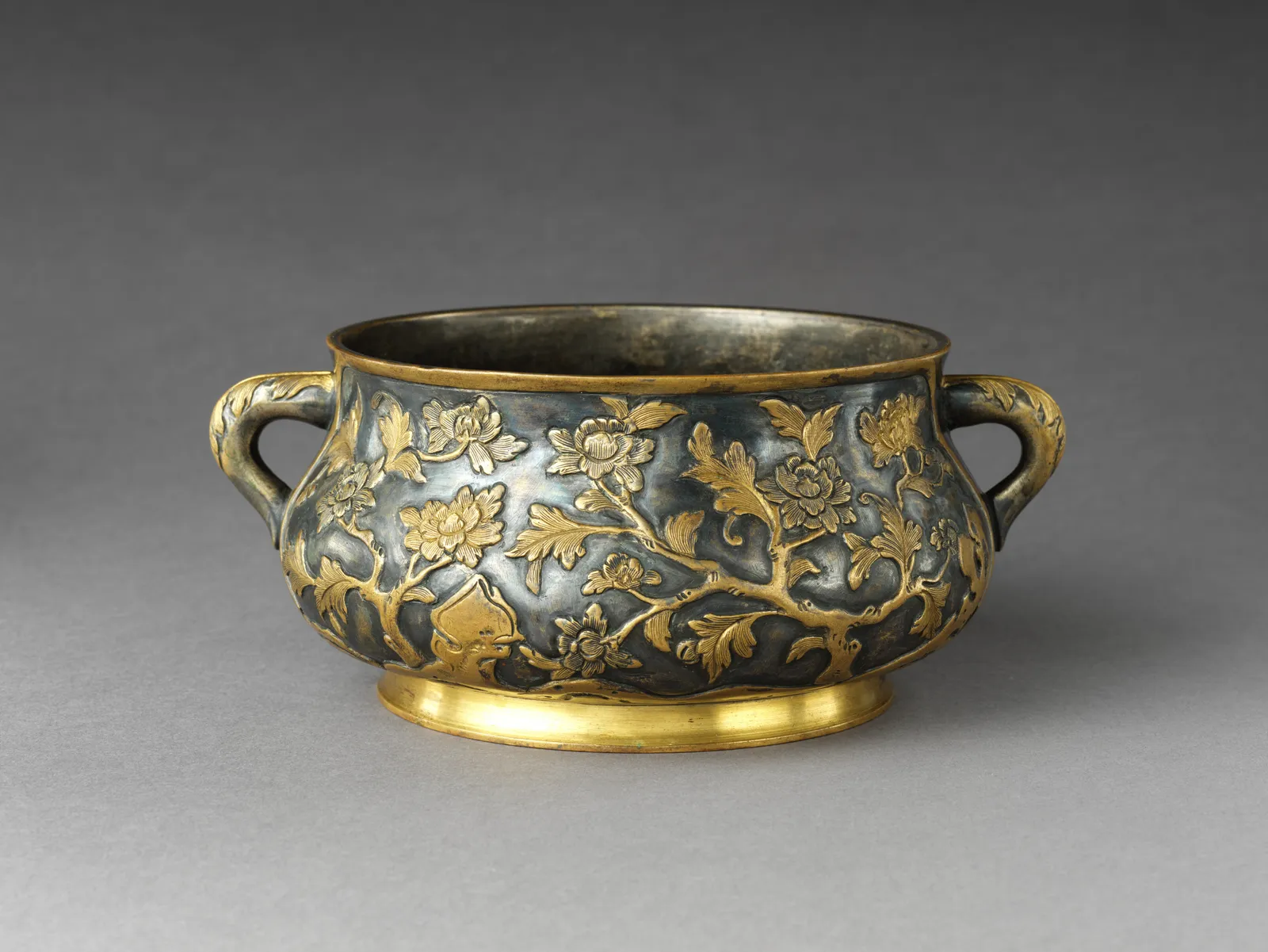
Chinese incense culture can look self-contained from the outside: bronze censers, porcelain burners, folded packets of powder. The materials were often not. Sandalwood is a clear example. It is not native to China. The fragrant part is the heartwood and roots, and the wood reached Chinese markets through long-distance trade. In Chinese, the material is usually called tanxiang (檀香), while Buddhist translations used zhantan (栴檀). That double naming is a clue: sandalwood entered China through more than one door, commercial and religious.
The Sea Route and the Scent of Cargo
Sandalwood’s main road was water. It came mainly by sea from India and Southeast Asia, which makes it part of the same broad trading world that carried other aromatics into China. A wood that grows in warm southern regions could travel with maritime shipping; it was one imported aromatic among many, not a native plant gathered in Chinese forests.
This matters for how we imagine incense history. The censer on a scholar’s desk might hold materials from several ecosystems. Chinese incense manuals therefore often discuss origin and grade, because scent was tied to place. Sandalwood was one of the imports that made Chinese incense a maritime story as much as a local one.
The Buddhist Bridge
Chinese Buddhist translations gave sandalwood a second life in China. The word zhantan (栴檀) appears in that translated vocabulary, and it helped place the wood inside Buddhist settings. In temples and offering scenes, incense is a marker of respect and ritual attention: a stick or a pinch of powder burned before an image, a sign that this moment is set apart.
That religious vocabulary helped make sandalwood familiar even to people who never owned a piece. This is cultural history, not a claim about spiritual power. The point is simpler: a translated word helped a foreign wood become liturgically legible, and temple demand gave it a steady place in the incense trade.
Sandalwood vs. Agarwood: The Difference That Matters
English pages often use sandalwood and agarwood as if they were near synonyms. They are not. Agarwood (chenxiang, 沉香) is a resinous wood formed when a tree is wounded and produces resin that combines with woody tissue. Sandalwood’s aromatic material is mainly heartwood and roots rich in fragrant components.
Chinese incense manuals list the two in separate categories and judge them by different standards. Agarwood is valued for resin formation; sandalwood is discussed in terms of the wood itself, including tree age and oiliness. Their scent structures, sources, and price logic are different. If a label treats them as interchangeable, be suspicious.
What Old Manuals Look For
The Ming dynasty Xiang Cheng, compiled by Zhou Jiazhuo, runs to 28 volumes and gathers earlier incense lore, formulas, and anecdotes. It is one of the most important Chinese incense compilations. Earlier Song works such as Chen Jing’s Chenshi Xiangpu and Hong Chu’s Xiangpu also circulated.
In this literature, sandalwood is not a single undifferentiated product. Origin, grade, age, and oil content matter. The vocabulary can be technical, but the underlying idea is easy to grasp: aromatic wood is a material with a biography. Where it grew, how old it was, and which part of the tree was used all shape how it was described.
Sandalwood in the Ritual Day
Most people did not burn imported sandalwood every day in premodern China. Incense could be expensive, and imported woods were luxury goods. That makes the surviving descriptions more interesting, not less. Sandalwood appears in temple offerings, in the studies of educated elites, and in blended incense.
Its aroma is often described as creamy, woody, and slightly cool—less resinous and dark than agarwood, more like a smooth wooden surface. In a blend, it can read as a steady woody note, though historical recipes vary widely. The Ming Xiang Cheng contains many formulas; not every formula uses sandalwood, and not every sandalwood is the same.
The Slow Clock of Smoke
Chinese incense was also a way to mark time. Incense powder could be pressed into a seal—a continuous path of powder lit at one end. The old Chinese day was divided into 100 ke; one ke was about 14 minutes 24 seconds, and the Qing later changed the day to 96 ke. An incense seal made a duration visible.
Incense seals were not necessarily sandalwood, but they show how seriously Chinese culture treated the act of burning. Smoke could be perfume, offering, and clock at once. That is one reason incense feels different from a modern scented candle: the burning itself has a beginning, a middle, and an end.
Legend, History, and a Cleaner Story
Buddhist tradition gives sandalwood a sacred aura, and that aura is part of its history. But we should not turn legend into shipping records. The documented outline is strong enough: sandalwood was not native to China; it arrived mainly by sea; Chinese Buddhist translations used zhantan; Chinese incense manuals distinguished it from agarwood; and its cost kept it from being a universal everyday item.
That is a more honest story than “Chinese people have always burned sandalwood.” It is also more interesting, because it puts trade, religion, and craft in the same room.
How to Approach Sandalwood Incense Today
If you want to explore sandalwood as culture, start with attention. Choose a simple stick or a small amount of powder, use a heat-safe holder, and keep the room ventilated. Do not leave burning incense unattended. Read the label for what it actually says: sandalwood, agarwood, or a blend.
Because agarwood is conservation-sensitive, this page does not recommend agarwood products. Sandalwood itself has a long commercial history, so origin and sourcing are fair questions to ask. The pleasure is in the ritual: a book, a cup of tea, a few minutes of quiet, and a scent that has traveled a very long way to reach the room.
Questions, answered
What is sandalwood incense?
It is incense made from the aromatic heartwood and roots of sandalwood trees. In Chinese history, sandalwood was an imported aromatic, mainly from India and Southeast Asia, and it appears in Buddhist vocabulary as zhantan (栴檀).
Why is sandalwood linked to Buddhism in China?
Chinese Buddhist translations used zhantan (栴檀) for sandalwood. In temple and offering settings, incense marks respect and ritual attention. That religious vocabulary helped make sandalwood familiar in Chinese incense culture, alongside its use in daily scent and blends.
How did sandalwood reach China?
Sandalwood is not native to China. It came mainly by sea from India and Southeast Asia. Maritime trade carried aromatics into Chinese ports, where incense makers and temples used imported woods alongside native fragrant plants.
How is sandalwood different from agarwood?
Sandalwood's scent comes mainly from its aromatic heartwood and roots. Agarwood forms when a tree is wounded and produces resin that combines with wood. Chinese incense manuals list them separately, and their scent structures, sources, and price logic differ.
How should I burn sandalwood incense?
Use it as a scent marker for reading, tea, or quiet conversation. Keep the room ventilated, place the incense on a heat-safe holder, and never leave it unattended. The goal is atmosphere and attention, not a promised effect.