A Chinese incense clock is a line of incense powder pressed into a continuous track — a character, a spiral, a meander — then lit at one end so it burns at a steady crawl. Because the powder burns at a predictable rate, the distance already burned tells you how much time has passed. The Chinese names are xiang zhuan (香篆, “incense seal”) and xiang yin (香印, “incense print”), and the practice is best documented in Song-dynasty sources.
The Seal Was the Dial
There were no gears and no hands. The clock was the groove itself.
Fine powder — sandalwood, or a blend from a family recipe — went into a shallow tray and was leveled with a mold called a xiang yin. Molds were cut from copper, wood, or porcelain, and they worked like a stencil: press, tamp the powder flat, lift the mold straight up, and a thin unbroken wall of powder stays behind on the ash bed.
Then you lit one end.
The burn had to be continuous. A gap in the powder, a groove packed too loosely, a draft from an open door, and the trail went out halfway through the night. That fragility is part of why the object is interesting: a clock you built by hand, then watched with your nose.
The Shapes Had Meanings
Seal-script characters were the favorite forms — 寿 for longevity, 福 for fortune, 心 for heart, 一 for one. Geometric meanders (huiwen, 回纹) and simple spirals show up too, closed loops that could run an hour or an evening depending on length. The character was the clock face, and the smoke wrote it slowly into the air above the tray.
A Day Measured in One Hundred Marks
Traditional Chinese timekeeping divided the day into one hundred ke (刻). One ke worked out to about fourteen minutes and twenty-four seconds — awkward to modern ears, and very natural if your timer is a burning line you can divide into segments.
Song incense manuals are said to include a “hundred-mark incense” (baike xiang) formula built for exactly that: a seal whose full burn covered a day and a night. In the Qing dynasty the court simplified the system to ninety-six ke of fifteen minutes each. Which is why a fifteen-minute timer feels oddly Chinese — that number comes straight out of a calendar reform.
The Vessel Underneath
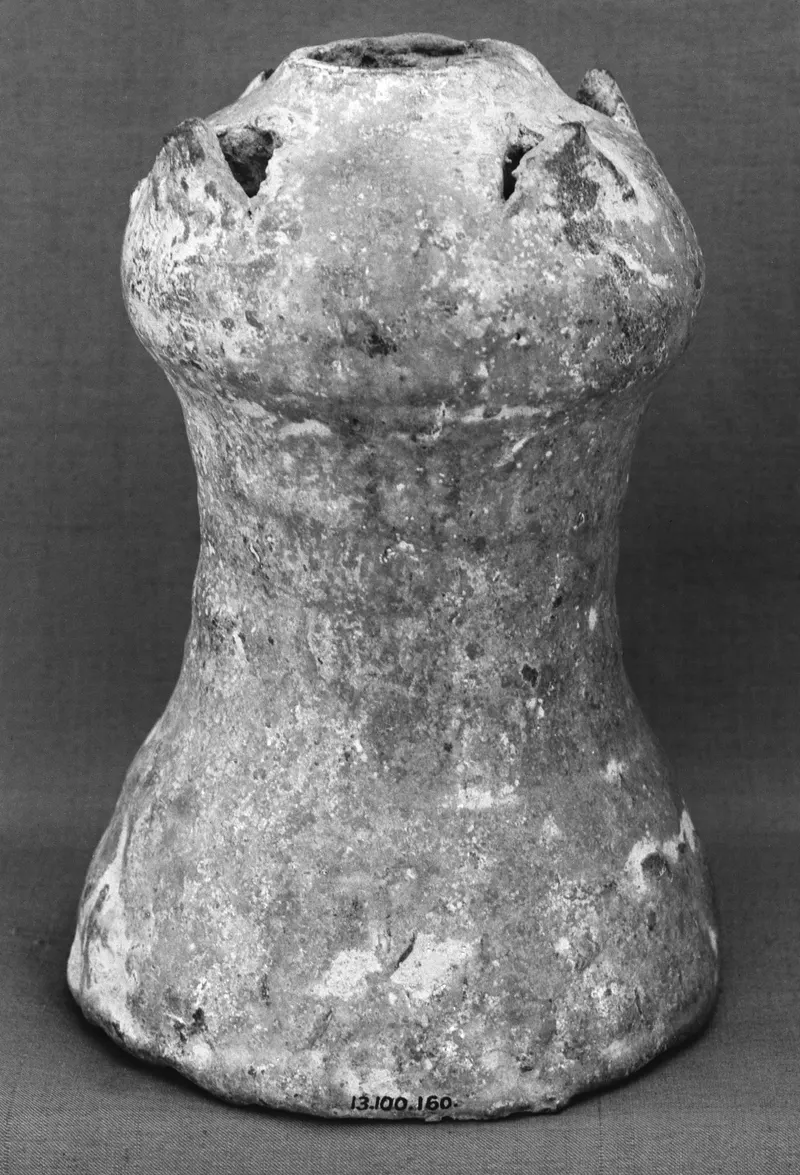
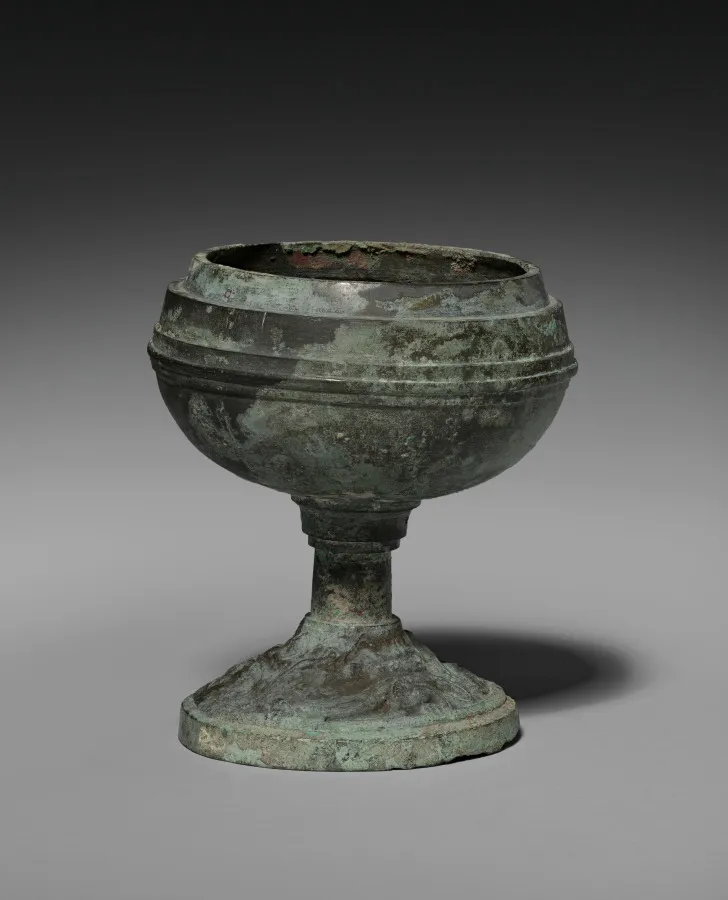
By the time incense seals were common, Chinese censers already had a long history behind them. Han-dynasty tombs are full of boshanlu (博山炉), “mountain censers,” whose domed lids rise into peaks and clouds with small openings for smoke. Those lids are often interpreted in relation to ideas about immortal mountains, though scholars still debate exactly what the imagery meant. The Xijing Zaji (西京杂记) credits the craftsman Ding Huan with a nine-tiered boshan censer carved with strange birds and beasts — probably an exaggeration, and a wonderful one.
Long before any of that, the Book of Odes describes burning fragrant mugwort at a sacrifice (Shijing, Daya, Shengmin). Smoke going up was the oldest form of message.
Smoke, Tea, and the Song Afternoon
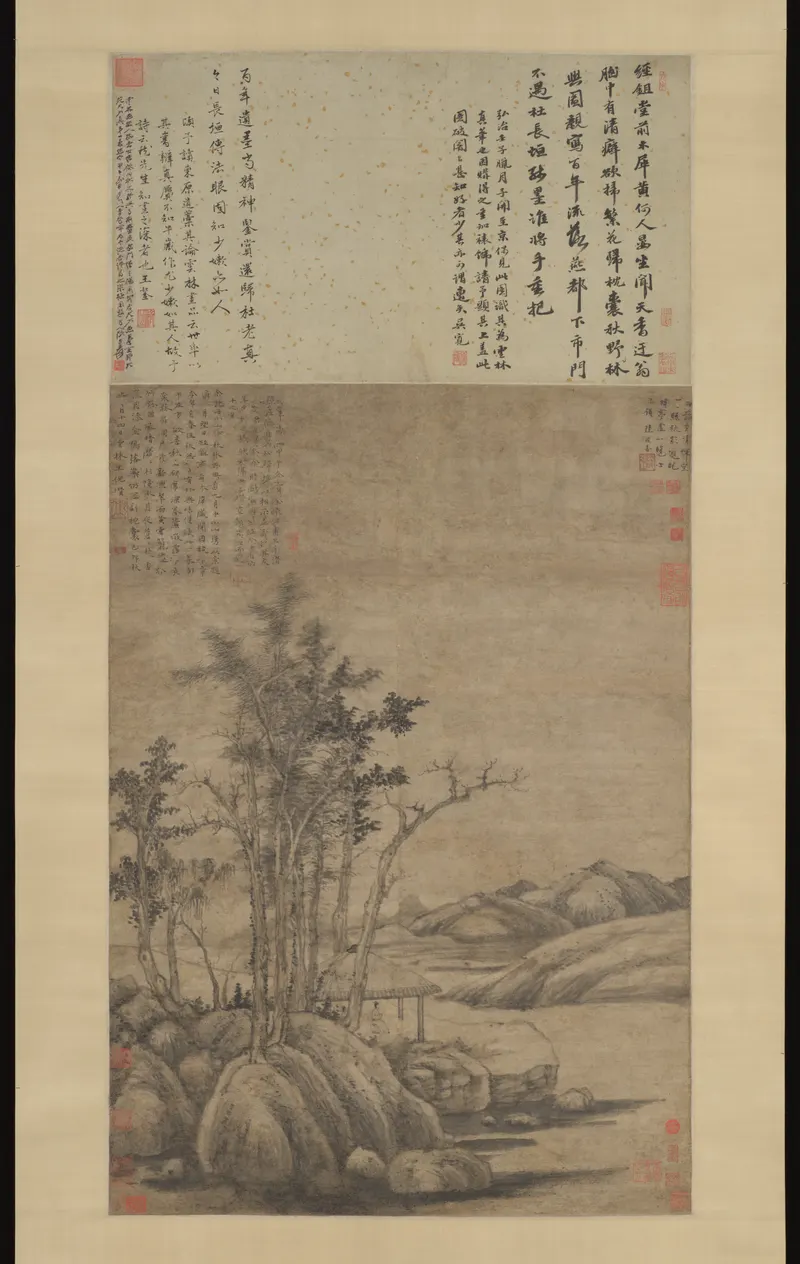
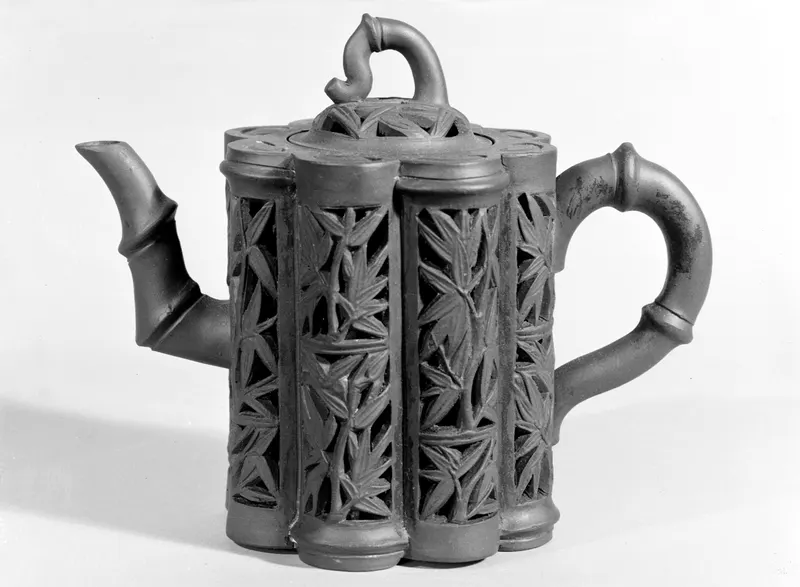
The Mengliang Lu (梦粱录), a portrait of Southern Song Hangzhou, groups burning incense, whisking tea, hanging paintings, and arranging flowers among the “four leisure pursuits” (四般闲事). The passage is usually read in the context of Hangzhou’s service trades: specialists a household could hire to handle all four.
It does not mean “four arts every scholar had to master,” and it does not mean “don’t let it burden the family.” English retellings get that wrong a lot.
Why Not Everyone Had One
It is tempting to picture every ancient Chinese home with a curl of smoke in the corner. Not so. Incense was expensive — aromatic woods arrived by caravan and by ship, and a good seal needed good powder. A device that turned that powder into a clock was a luxury stacked on a luxury. Ordinary households might burn incense at a temple, at a festival, or on a special occasion, not every evening.
What survived is the ideal: a room, a tray, a line of scent, and enough quiet to notice it.
Trace a Seal Yourself
The incense clock tool here lets you pick a duration — 15, 30, 45, 60, or 120 minutes — and a pattern, then watch a burn head travel the path with a countdown in the corner. When it finishes, you get a card with the burn time and its equivalent in old ke. You can also print a template at full scale and try the real thing.
What’s Documented, What’s Tradition
The hundred-ke day is solid history. The incense seal as a timekeeper is well attested in Song material. Tradition holds that a specific “hundred-mark incense” formula appears in the Chen family incense manual; the exact chapter is still being checked, so we don’t present it as settled. And the charming attributions — a particular seal design invented by a particular poet — are mostly story.
For the bigger picture, the Ming compendium Xiang Cheng (香乘), compiled by Zhou Jiazhuo in twenty-eight volumes, gathers centuries of formulas and incense lore in one place.
Before You Light Anything
Burn on a heat-safe tray, in a ventilated room, and never leave a burning seal unattended. Incense smoke carries particulate matter, so treat it as something to enjoy briefly rather than something to fill a closed bedroom with. Several agarwood species are listed under CITES and wild stocks are under pressure, which is why we don’t point you toward any particular agarwood product here.
{
 "incense_clock": {
  "templates": [
   {
    "template_id": "shou-15",
    "name": "寿 (longevity) seal",
    "pattern_type": "seal_script_character",
    "closed_path": false,
    "intended_burn_minutes": 15,
    "path_length_cm": null,
    "groove_width_mm": 3,
    "difficulty": "beginner",
    "source_note": "Traditional seal-script pattern; no single historical source for this exact template.",
    "source_reliability": "tradition"
   },
   {
    "template_id": "fu-30",
    "name": "福 (fortune) seal",
    "pattern_type": "seal_script_character",
    "closed_path": false,
    "intended_burn_minutes": 30,
    "path_length_cm": null,
    "groove_width_mm": 3,
    "difficulty": "beginner",
    "source_note": "Traditional seal-script pattern; template geometry is a modern reconstruction.",
    "source_reliability": "tradition"
   },
   {
    "template_id": "xin-45",
    "name": "心 (heart) seal",
    "pattern_type": "seal_script_character",
    "closed_path": false,
    "intended_burn_minutes": 45,
    "path_length_cm": null,
    "groove_width_mm": 2.5,
    "difficulty": "intermediate",
    "source_note": "Traditional seal-script pattern; fine strokes make an unbroken burn harder.",
    "source_reliability": "tradition"
   },
   {
    "template_id": "huiwen-60",
    "name": "回纹 (meander) loop",
    "pattern_type": "geometric_meander",
    "closed_path": true,
    "intended_burn_minutes": 60,
    "path_length_cm": null,
    "groove_width_mm": 3,
    "difficulty": "intermediate",
    "source_note": "Geometric meander is a common decorative motif; use as a clock path is a modern adaptation.",
    "source_reliability": "modern_adaptation"
   },
   {
    "template_id": "yi-120",
    "name": "一 (one) long stroke",
    "pattern_type": "single_stroke",
    "closed_path": false,
    "intended_burn_minutes": 120,
    "path_length_cm": null,
    "groove_width_mm": 4,
    "difficulty": "beginner",
    "source_note": "Simplest possible path; no historical template claimed.",
    "source_reliability": "modern_adaptation"
   }
  ],
  "burn_parameters": {
   "powder_type": null,
   "burn_rate_cm_per_min": null,
   "calibration_date": null,
   "source": "unverified — no published rate is used; path lengths must be recalculated after testing"
  },
  "ke_conversion": {
   "minutes_per_day": 1440,
   "systems": [
    {
     "name": "hundred-ke (百刻)",
     "marks_per_day": 100,
     "minutes_per_mark": 14.4
    },
    {
     "name": "ninety-six-ke (九十六刻, Qing reform)",
     "marks_per_day": 96,
     "minutes_per_mark": 15
    }
   ]
  },
  "user_state": {
   "selected_template": null,
   "start_time": null,
   "remaining_seconds": null,
   "completed": false
  }
 }
}Questions, answered
What is a Chinese incense clock?
It's a trail of incense powder pressed into a continuous pattern and lit at one end. Because the powder burns at a steady rate, the distance already burned measures the time. The Chinese terms are xiang zhuan (incense seal) and xiang yin (incense print).
How long did one incense seal burn?
Seals came in many lengths, from short characters to full-day spirals. Song sources describe a 'hundred-mark incense' covering one hundred ke, roughly twenty-four hours. Shorter seals used shorter or finer paths — the pattern is the dial, the powder is the calibration.
What were incense seals made from?
The mold — the xiang yin — could be cut from copper, wood, or porcelain. You pressed fine incense powder into its groove, usually over a bed of ash, then lifted the mold straight up to leave a thin continuous wall of powder behind.
Why did a Chinese day have 100 ke, then 96?
The hundred-ke day was the old standard, each ke about fourteen minutes and twenty-four seconds. In the Qing dynasty the court switched to ninety-six ke of fifteen minutes each. Both divide a full day and night; only the arithmetic changed.
Do people still burn incense clocks today?
Not for official timekeeping. Today incense seals are burned as craft, as a patience practice, and as a slow timer for reading or tea. Museums and incense workshops still demonstrate the molds, and printable templates let you try the geometry at home.