Chinese New Year 2027 begins on February 6, 2027 — day one of the first lunar month, and the start of the Year of the Goat (Ding-Wei on the traditional stem-and-branch cycle). The festival runs 15 days and closes with the Lantern Festival on February 20. February 6 is the date most published calendars currently list for 2027, and it is worth confirming against an authoritative almanac before you print invitations or set a countdown clock.
The date, and how to check it
A lunar month starts at the new moon, so New Year’s Day is computed rather than counted. The Chinese Astronomical Almanac compiled by the Purple Mountain Observatory is the usual reference for these calculations, and professional calendars follow its figures rather than a simple pattern.
For a family or a party, that means two habits. First, treat February 6, 2027 as the working date but verify it against the almanac before anything goes to a printer. Second, if you build a countdown, say plainly whether it counts to midnight in Beijing or midnight where the reader lives. The festival date itself does not change with your time zone — only the moment it arrives for you does.
Why the New Year moves every year
Lunar months run 29 or 30 days. Twelve of them add up to roughly 354 days, about 11 days short of a solar year, so an uncorrected lunar calendar would slide backward through the seasons. Chinese calendars fix this by inserting a leap month every few years, placed by a rule tied to the solar terms.
The result is a holiday that wanders through winter on the Gregorian calendar instead of sitting on a fixed square. That is also why your birthday’s zodiac animal and your “lunar birthday” can land in different years than you expect.
2027 on the 60-year clock: Ding-Wei
Ten heavenly stems and twelve earthly branches turn side by side. Because the least common multiple of 10 and 12 is 60, the pairings only repeat every 60 years, and 2027’s pairing is Ding-Wei (丁未).
Early discussions of animal–earthly branch pairings appear in Wang Chong’s Lunheng, including the “Wushi” chapter and others, from the Eastern Han — though the wording there differs from the list most people use today. The zodiac is a settled folk system with a long paper trail, not a single ancient decree.
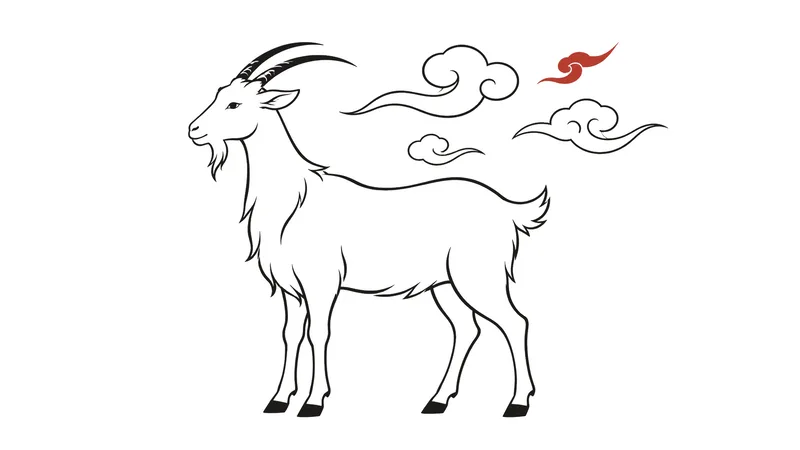
One translation note: Chinese 羊 does not distinguish goat from sheep. Year of the Goat, Year of the Sheep and Year of the Ram all point to the same year, so don’t let a headline confuse you.
Which day does the goat take over?
Here the sources really do split, and it’s worth being upfront about it. Folk and community custom starts the zodiac year on Chinese New Year’s Day. Traditional fortune-calendar (bazi) practice often starts it at Lichun, the “start of spring” solar term in early February. This page uses the festival boundary, the one your neighbors and the parade will use.
Either way, the animal is a calendar label. “What’s my sign” is a party game and a cultural shorthand — not a forecast about your year.
The 15 days, checkpoint by checkpoint
New Year’s Eve is the reunion dinner, and for many families it carries more weight than the first day itself.
Day 1. The Jingchu Suishi Ji, a record of Jingchu customs, describes households rising at cockcrow and setting off baozhu in the front courtyard. Those earliest “firecrackers” were real bamboo stalks thrown into a fire — the trapped air burst with a bang.
Days 2 through 6 are the least standardized stretch. Visiting relatives, resting, eating through the leftovers and regional dishes, and traveling to a spouse’s family all happen in different orders depending on where you are.
Day 7 is Renri, “people’s day,” also recorded in the Jingchu Suishi Ji.
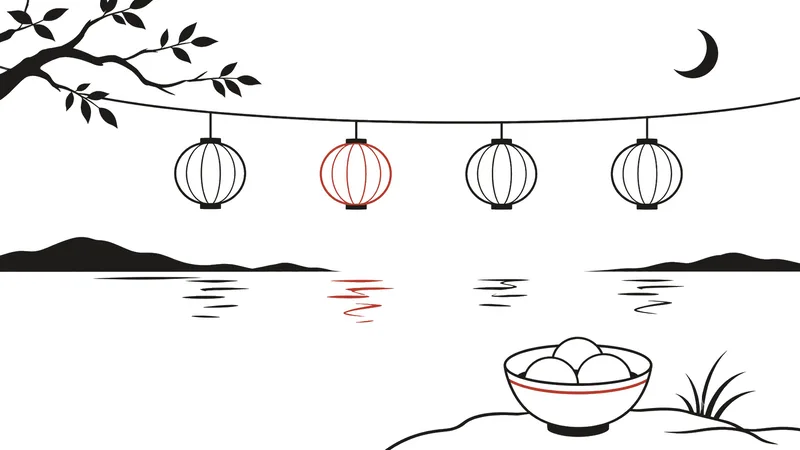
Day 15 is the Lantern Festival. The same Jingchu text describes welcoming the goddess Zigu to ask about the coming silkworm crop; later sources say riddles were written on silk lanterns to tease passers-by, though the exact wording still needs verification. Sweet tangyuan close out the holiday. If you hang lanterns at home, LED versions are the safe default, and open flames need a doorway’s worth of clearance and an adult nearby.
Doors, money, and a clean house
Door couplets began as peach-wood charms hung beside the entrance. Wang Anshi’s New Year poem says it plainly: “we swap the old peach charm for a new one.”
New Year gift money is recorded in the Qing-era Yanjing Suishi Ji, which describes coins strung on colored cord and shaped into a dragon, laid at the foot of the bed as “pressed-year money.” Today it’s paper envelopes, or a phone notification — the etiquette is the same: give and receive with both hands, and a small word of good wishes.
Two practical house rules: clean before New Year’s Day, not on it, and check your city’s rules before buying firecrackers. Many American municipalities restrict them outright.
What’s on the table
The north-versus-south split is real and friendly. Northern tables lean on dumplings; southern ones on tangyuan and nian gao, the sticky rice cake whose name puns on “higher year.” Regional showpieces run from Guangdong’s pencai to Shandong’s flower buns to Fujian’s nian gao.
If you’re cooking for a crowd, read labels: dumpling wrappers and many buns contain wheat, tangyuan are glutinous rice often filled with peanut, sesame or black bean, and nian gao is sticky rice with sugar. Keep raw and cooked food separate, and refrigerate fillings you’re not using right away.
The Year Beast is a modern story
The monster named Nian, scared off by red paper and loud noise, is a popular modern folk tale. You won’t find it in early classical texts, and it’s worth saying so — the real customs (peach wood, bamboo in the fire, red envelopes) have their own older paper trails.
Celebrating in the US
Cities with large Chinese communities usually run parades and street fairs in the days around the holiday; museums, libraries and cultural centers often program lion dances, calligraphy tables and lantern crafts. Schools and workplace groups host potlucks and red-envelope exchanges. None of it requires a family connection — curiosity and a dish to pass are enough.
At home, the easy version looks like this: clean the week before, hang something red on the door, cook dumplings from frozen wrappers, hand kids envelopes with chocolate coins, and video-call family in Asia. If you want to catch the moment itself, remember that a “New Year countdown” needs its time zone stated — the date doesn’t move, but the hour does.
In China today the holiday is a short public break wrapped around a very long travel rush, with digital red envelopes and a lot of group-chat negotiation about whose house for dinner. The 15-day frame is the tradition; the schedule is whatever the family negotiated.
Tea on the New Year table
Between the dumplings and the visitors, a pot on the table does quiet work. Ginseng eight-treasure tea — dried fruit, rock sugar, a tea base and a slice of ginseng root — is a hospitality tea: sweet, fruity, and made to be topped up with hot water all afternoon while people keep talking. Pour for others before yourself, keep the lid off between rounds, and let the pot empty slowly.
Note that it contains ginseng; if you’re pregnant or taking medication, check with a doctor before drinking it.
{
 "chinese_new_year_2027": {
  "provisional": true,
  "calendar_note": "Dates follow the widely published Feb 6, 2027 start of the first lunar month and should be confirmed against an authoritative almanac before printing.",
  "new_year_day": "2027-02-06",
  "lunar_year": {
   "stem_branch": "Ding-Wei",
   "stem_branch_zh": "丁未",
   "zodiac_en": "Goat",
   "zodiac_zh": "羊",
   "zodiac_alternates": [
    "Sheep",
    "Ram"
   ]
  },
  "zodiac_boundary": "Chinese New Year's Day (folk calendar); some fortune-calendar systems use the Lichun solar term instead",
  "festival_length_days": 15,
  "key_dates": [
   {
    "day": 1,
    "date": "2027-02-06",
    "name_en": "Chinese New Year's Day"
   },
   {
    "day": 7,
    "date": "2027-02-12",
    "name_en": "Renri (People's Day)"
   },
   {
    "day": 15,
    "date": "2027-02-20",
    "name_en": "Lantern Festival"
   }
  ],
  "disclaimer": "Zodiac and calendar material is presented as folk culture and play, not as prediction."
 }
}Questions, answered
What date is Chinese New Year 2027?
February 6, 2027 is the date most published calendars give for day one of the first lunar month. Confirm it against an authoritative almanac before printing invitations, and note whether any countdown counts to Beijing midnight or your local midnight.
What zodiac animal is 2027?
2027 is the Year of the Goat, Ding-Wei on the 60-year stem-and-branch cycle. Because the Chinese character 羊 covers goat, sheep and ram, you will also see Year of the Sheep or Ram. Treat the animal as a calendar label and party theme, not a prediction.
How long does Chinese New Year last?
Fifteen days, from New Year's Day to the Lantern Festival on the 15th night — February 20 if the year starts February 6. Most workplaces close for a shorter stretch, and the middle days follow local family custom rather than one national script.
Is 2027 the Year of the Sheep or the Goat?
Both. Chinese 羊 does not split goat from sheep, so English translators choose differently. Goat, sheep and ram all point to the same lunar year and the same zodiac slot, which pairs with the earthly branch wei (未).
How can I celebrate Chinese New Year 2027 in the US?
Look for parades and museum programs in cities with Chinatowns, cook dumplings or tangyuan at home, hand out red envelopes to kids, clean the house beforehand, and call family in Asia. Many schools and workplace groups host potlucks — bring a dish and ask your host about customs.